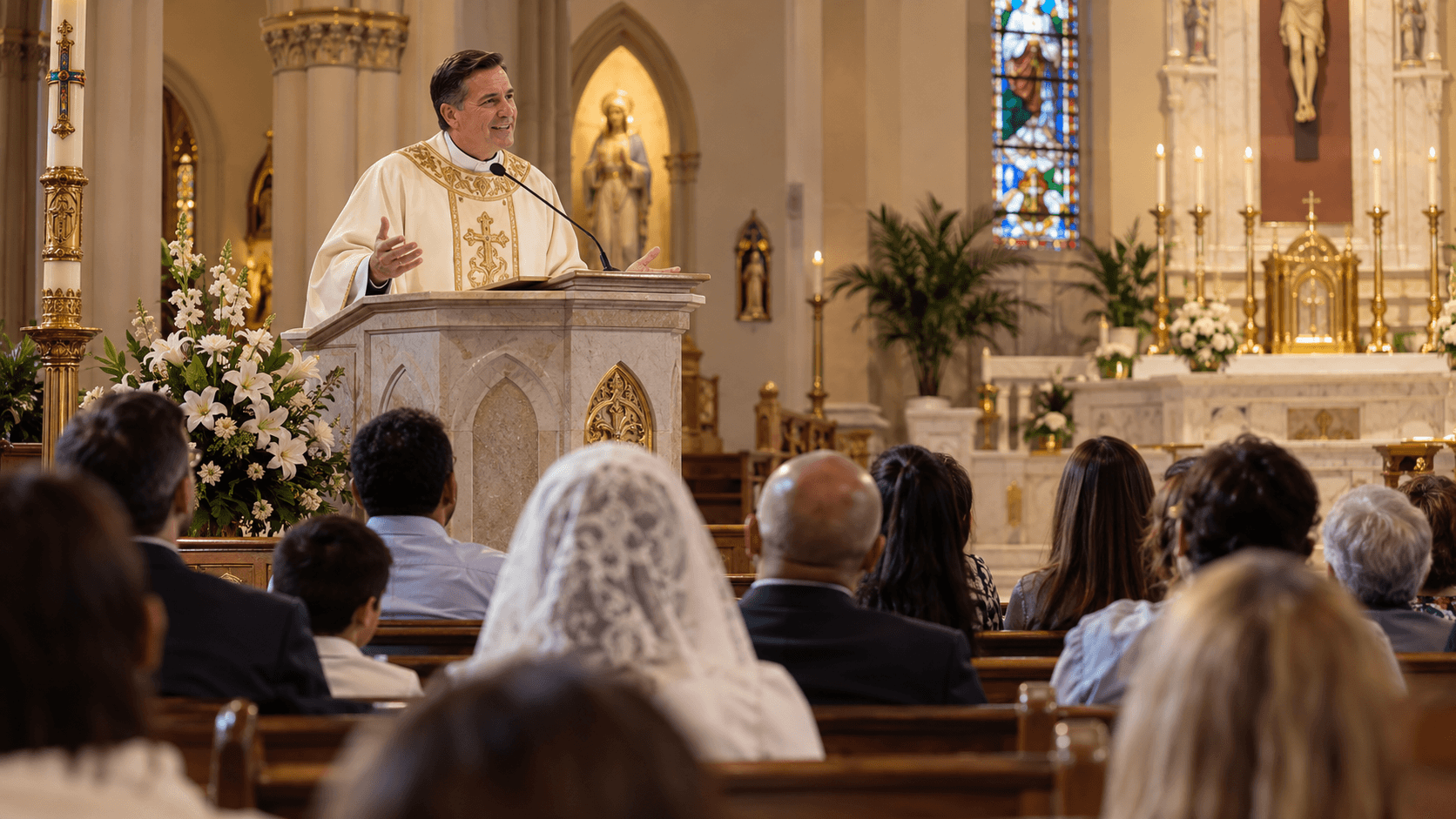
✝ Catholic Homily Preparation
Build Catholic homilies rooted in the readings — without starting from a blank page.
Walk into Mass prepared and preaching in your own voice — without losing your week to a blank page.
A free Catholic thought partner for priests, deacons, and ministry leaders. Choose the readings, audience, tone, length, and language — and build a message faithful to Catholic teaching and clear for the people you serve. Six homilies a month are free.
Not a replacement for prayer, preparation, or pastoral judgment — a faithful thought partner.

We understand the weight of it
Preparing a homily should never feel like starting alone.
The time problem
You have a parish to run, confessions to hear, visits to make, and a Mass to celebrate. Sunday comes the same day it always does. The readings don't wait, and neither does the pew.
The structure problem
A homily that wanders loses people. One that stops without landing leaves them empty. Most preachers know what they want to say — but not always how to say it clearly, in a way that moves people from the Word to a response.
The connection problem
A message that's theologically sound but doesn't reach the tired mother in row four, the grieving man near the back, or the teenager who came reluctantly — is a missed moment. Good preaching requires knowing who you're speaking to.
The homily is not an inspirational talk. It is the proclamation of the Word of God to people who came because they believe something real might meet them there.
That's what makes it sacred — and what makes poor preparation a pastoral cost, not just to the preacher, but to the congregation. The readings deserve better than generic. The people deserve better than vague. And you know that. Which is exactly why this matters.
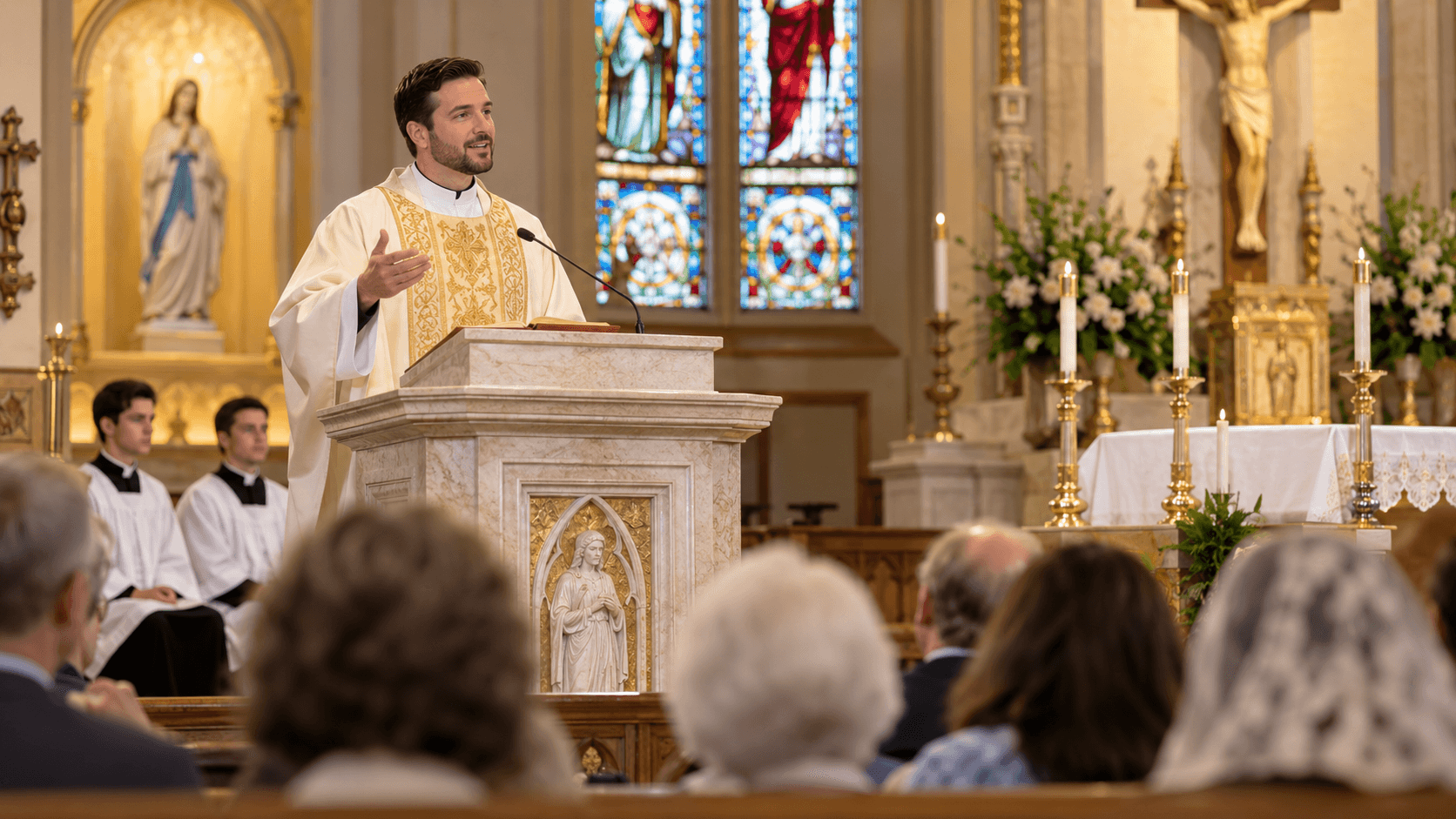
“Preach the word; be ready in season and out of season.”
— 2 Timothy 4:2
How it works
Three steps. One faithful structure. Your voice.
No blank page. No wasted hour wondering where to start. Just the readings, a clear structure, and a message shaped for the people in front of you.
Choose the day
The readings for the coming Sunday are already waiting — selected according to the U.S. Lectionary, in the right year of the cycle. Daily Mass, feasts, funerals, weddings, and school Masses are one click away.
Prefer your own translation? Paste the readings from your lectionary, Magnificat, or breviary.
Say who you’re speaking to
Build straight away with sensible defaults — or tell it who will be in front of you: a Sunday assembly, a school Mass, a grieving family. Set the length and the tone, in English, Spanish, or French.
Add a line about your parish this week, and the draft will carry it.
Make it yours
In about a minute you have a structured draft — an opening, the truth in the readings, why it matters now, a concrete call, and a close. Then you do what only you can do: pray with it, cut it, and preach it in your own voice.
A starting point, never a finished homily. The Holy Spirit still has the final word.
The faithful framework
Every generated homily — at every length, in every language — moves through four phases that carry people from the Word to a living response.
The Truth
Establish the core truth the readings reveal — clearly, without announcing it as a thesis.
Why It Matters
Show why that truth is urgent and necessary for this specific audience, today.
The Call
Name one or two concrete, do-able responses the Word is genuinely inviting.
The Reason
Root the response in grace, love, and union with Christ — not duty or obligation.
The listener never hears the structure — they just feel the movement. That is the difference between a homily that informs and one that stays.
What you can build
One tool. Every context. Always the readings.
The homily builder adapts to the occasion, the audience, and the language — while the four-part model and the readings stay at the center.
5-Minute Homily
Clear, brief, rooted in the readings. Perfect for daily Mass or when time is short.
10-Minute Homily
Balanced theology, application, and pastoral depth. The Sunday standard.
13-Minute Homily
Fuller explanation, richer examples, deeper development across all four movements.
Daily Mass Reflection
Short, direct, prayerful, and practical. Built for the weekday faithful.
School Mass Message
Simple, engaging, age-appropriate, and faithful. Reaches students where they are.
RCIA / OCIA Reflection
Catechetical, welcoming, and clear. Helps those coming into the Church encounter it faithfully.
Retreat Talk
Deeper, more contemplative, with prayerful application. Space for silence and movement.
Funeral or Grief Reflection
Gentle, hopeful, reverent, and pastoral. Holds loss without avoiding hope.
Spanish Homily
Naturally written in Spanish — not translated. For communities who worship in their heart language.
French Reflection
Faithful and audience-specific in French. For Francophone Catholic communities.
AI & the Church
Is it faithful to use AI to prepare a homily?
It's the right question to ask — and the Church has answered it. In 2025 the Vatican taught that artificial intelligence can serve genuine human good, but must always remain a tool — never a substitute for the human person, his conscience, or his relationship with God. That is exactly how this is built: an instrument that helps you study and shape, while the prayer, the discernment, and the voice stay yours.
“Artificial intelligence… should be used only as a tool… it is not, properly speaking, a form of intelligence equal to the human person.”
— Antiqua et Nova, Dicastery for the Doctrine of the Faith & Dicastery for Culture and Education (2025). Pope Leo XIV has likewise urged that technology serve the Gospel and human dignity — never the other way around.
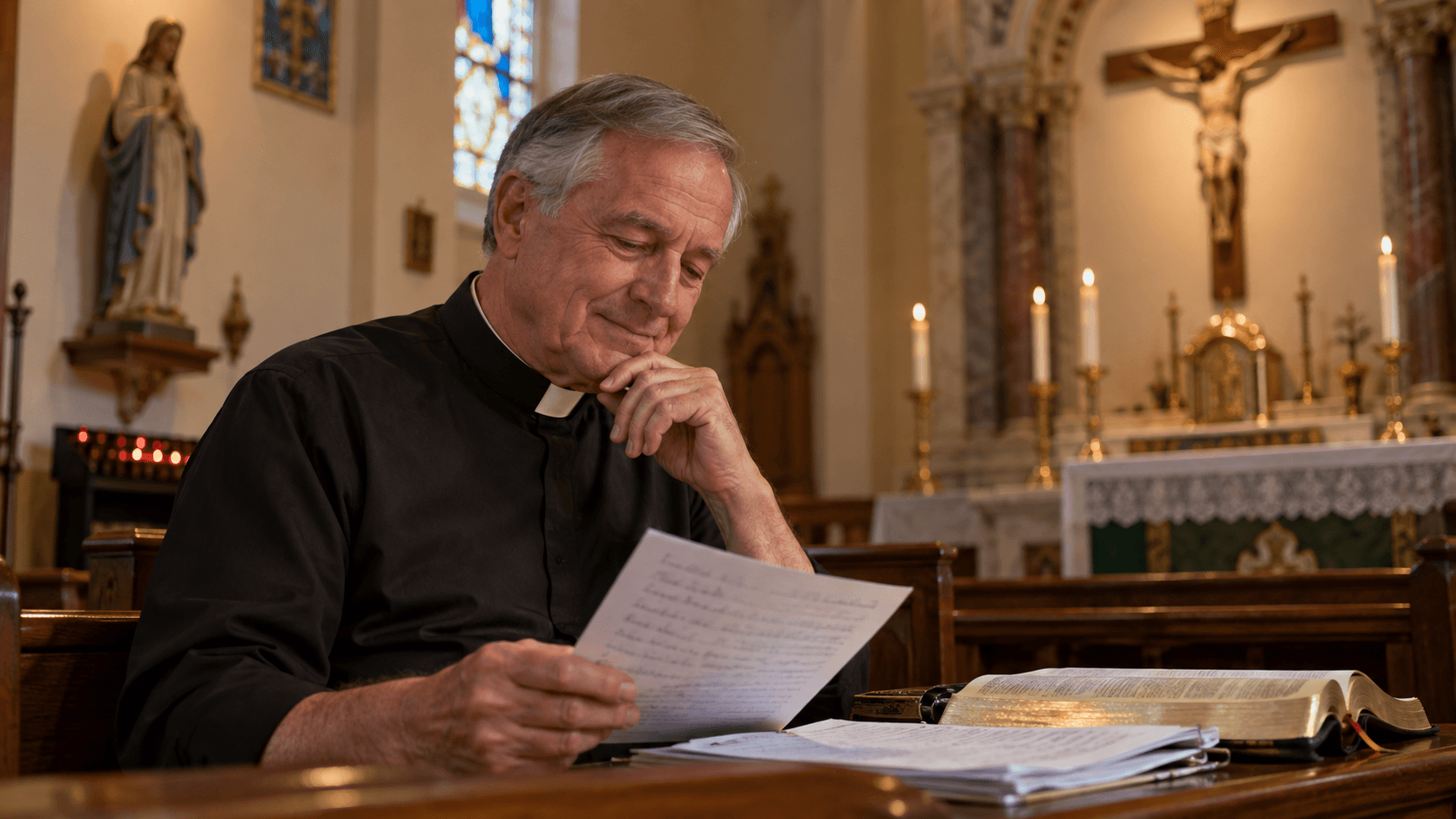
Built to serve Catholic teaching, not replace the preacher.
Every generated homily should be reviewed, refined, and delivered in the presenter's own voice. It is not a substitute for prayer, study, pastoral judgment, or the authority of the Church.
Rooted in the actual readings — always
Every homily starts with the specific readings you provide. The Word is the source, not the seasoning. Generic Catholic content is not accepted here.
Built on a proven preaching structure
Every homily moves through four phases — I · The Truth, II · Why It Matters, III · The Call, IV · The Reason. The structure is invisible to the listener. The movement is not.
Faithful to Catholic teaching. Always.
This tool is built to support the proclamation of the Catholic faith. It does not contradict Church teaching, drift into cultural commentary, or touch partisan issues.
Sounds like a person, not a program
No clichés. No filler. No 'journey' or 'unpack.' The writing is designed to sound like a priest who prayed with these readings — because that is exactly the standard it is built to meet.
Every message should
References the assigned readings — always.
Follows the four-part model in every version.
Respects and upholds Catholic doctrine.
Avoids partisan politics, cultural commentary, and generic motivational content.
Avoids irreverent, sarcastic, or inappropriate humor.
Leads people toward Christ and a concrete spiritual response.
Is reviewed, refined, and delivered by the presenter before use.
This tool is designed to support Catholic preaching in alignment with Catholic doctrine, but generated content should always be reviewed by the presenter and, when necessary, by appropriate Church authority.
What changes
Walk to the ambo knowing what you came to say.
Saturday night is yours again.
The draft exists early in the week, so the last quiet hour goes to prayer — not to a blank page and a clock.
You stand up with one clear thing to say.
A homily with a shape carries people from the Word to a response. They leave knowing what it was about.
It still sounds like you.
Your stories, your people, your voice. The structure is only there so the Word lands — never to replace the one preaching it.
Not a more efficient homilist. A more present one.
Start free
Try it this Sunday. Six homilies a month are on us.
No subscription to start, no credit card. Build a complete homily from this week's readings and see the quality for yourself. When you're preaching most days, affordable plans are ready when you are.
Six complete homilies every month — free
Rooted in the actual Sunday readings
English, Spanish, or French
Built on the proven four-part model
No credit card. Just your email to read, copy, and print it.
Free to start · No credit card · Rooted in the readings
See all plans →Starting points
The readings always lead somewhere.
These aren't generic topics — they're the kind of themes the readings naturally surface. The tool builds the full homily from your actual readings, shaped for your audience.
"When God asks us to trust before we understand"
Best for: Ordinary Time, discipleship, vocation, uncertainty
"What the Gospel reveals about mercy — and why we resist it"
Best for: Lent, confession, healing, forgiveness
"Three ways we avoid hearing God's voice — and one way back"
Best for: Sunday parish, retreat, youth audience
"What this reading teaches us about suffering and hope"
Best for: Funerals, grief, Easter season, difficult seasons
"Why obedience is not the opposite of freedom"
Best for: Catechetical, young adults, Confirmation
"The difference between knowing about Jesus and following Him"
Best for: Evangelizing, RCIA / OCIA, Sunday parish
"What the Eucharist teaches us about receiving before giving"
Best for: Sunday Mass, Corpus Christi, Eucharistic themes
"One concrete thing this Gospel is asking of you this week"
Best for: Daily Mass, practical preaching, families
"From fear to mission — what happened between the tomb and Pentecost"
Best for: Easter season, Pentecost, discipleship
"What it means that God chose to be born into an ordinary family"
Best for: Christmas, Advent, Holy Family, parish families
Free to use. Readings load automatically.
“Faith comes from hearing, and hearing through the word of Christ.”
— Romans 10:17
Built by Catholics, for the service of God's Word.
We saw a real need: priests, deacons, teachers, and ministry leaders carry the responsibility of communicating the faith clearly and faithfully — while also serving their communities in countless other ways.
What this is
A free thought-building partner — not a replacement for the preacher's prayer, study, personality, or pastoral care. It supports the work. It does not replace the shepherd.
What we hope
That this tool becomes a faithful companion in preparation — helping you clarify ideas, organise the message, connect with your audience, and bring the readings to life.
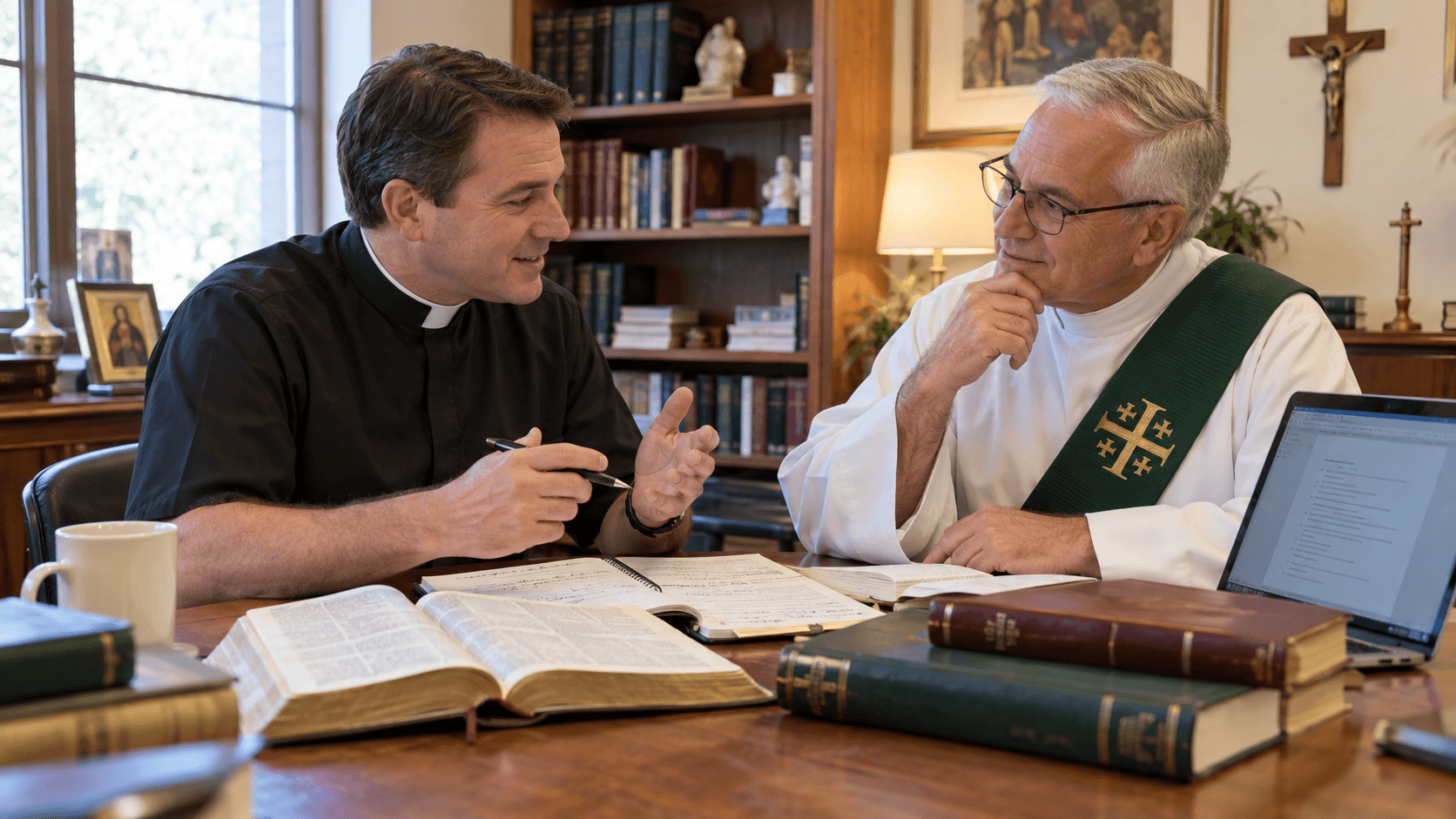
We built this because we love the Catholic faith, the Word of God, and the people who gather every Sunday to hear it.
We know that preaching and teaching are sacred responsibilities. We also know that leaders often prepare under real pressure — with limited time, many responsibilities, and a deep desire to serve well.
The homily belongs to the preacher and the Holy Spirit. This tool is just here to help you prepare.
No account needed. Readings auto-load.
FAQ
Common questions
Ready to begin
Build a faithful message from the readings.
Start with the Word of God. Choose your audience. Shape the tone. Build around the 4-part model. Review, refine, and deliver it in your own voice.
Build Your Free HomilyFree to start. No credit card. Rooted in the readings.
Not ready to build one yet?
Read our free preaching guidesShort, practical guides on preparation, delivery, and the craft of the homily.